Jaipur, 1976
On the very first day, when dreams began to take shape, a small unit set up with just two tables, two printers—a father and son duo—blocks carved from old designs, and buckets of colour. Realisation seeped in that this was not merely work, but a passion that would require a lifetime of learning and dedication. Even today, nearly fifty years later, when conducting workshops, one continues to remain both teacher and student. Each participant, with their experiments and enthusiasm, add to ever-expanding canvas of learning.
Chittor, 1975
During our six-month stay in Chittor, a small town in Rajasthan, started enquiring about the region’s hand block printing tradition specially of Jajams – Floor Coverings, but could find no trace. After persistent enquiry, finally came across an elderly man who shared his story. Before Partition, he had been a printer and owned a small printing unit. However, Partition changed everything—most of his family and community left, and the tradition gradually disappeared.
He remained behind with only fragments of his past: a few printing blocks stored carefully inside matkas (earthen water pots), tucked away in an underground store that had not been opened for decades. Initially, he was unwilling to open it for us. After several visits and much persuasion, he finally agreed.
We fumigated the store and entered a small, low-roofed room lined with earthen pots. Inside them were a few blocks —an extraordinary treasure. He was reluctant to part with them or sell them, as they were precious relics of his past that he had preserved with great love and care. Eventually, seeing our enthusiasm and joy at discovering them, he gifted us a few blocks. He firmly refused to accept any payment or material benefit in return.
Tradition
Traditionally, printing blocks were tools of livelihood and were considered sacred. They were neither sold nor destroyed nor burnt. Instead, they were carefully preserved throughout their useful life and, once worn out, respectfully immersed in flowing rivers.
The Blocks of Chittor
The old man’s blocks revealed that Chittor once had a tradition of printing Jajams—large floor coverings made from locally woven fabrics stitched together and printed using shyahi–begar, then finished with tapai. The designs were primarily floral arranged within geometric frameworks.
What was particularly surprising, however, was the presence of blocks showing Indo-European influences, as well as Saudagiri patterns.
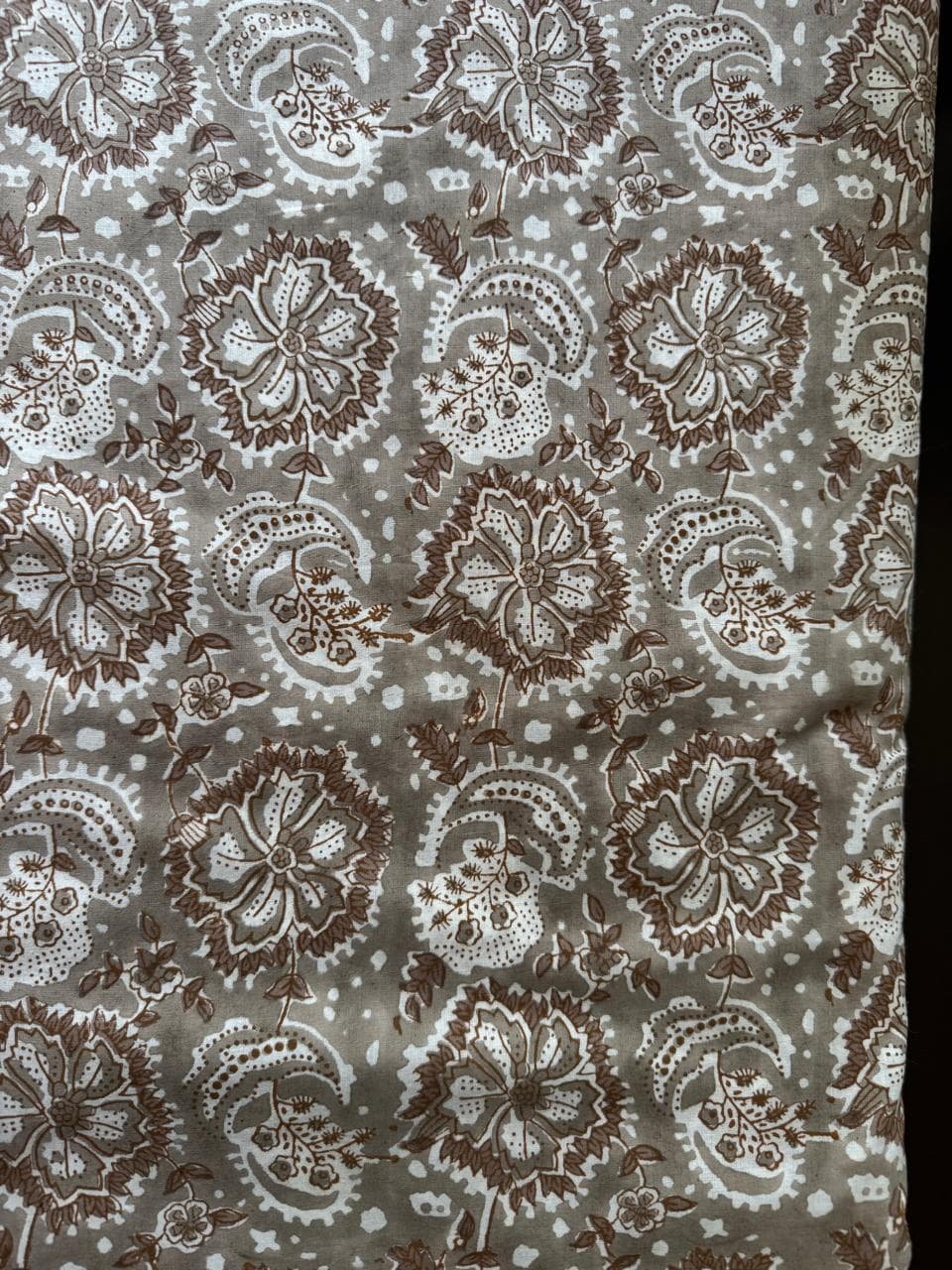
Further research on the block pattern revealed – a very interesting example of what textile historians often call a late Indo-European hybrid block-print style—a category that appeared in several secondary printing centres such as Chittorgarh during the late 19th to early 20th century, continuing up to the years just before Partition. The Floral Rosettes: A European Naturalistic Influence -Victorian textile florals, furnishing chintz motifs of late colonial export-adapted block prints
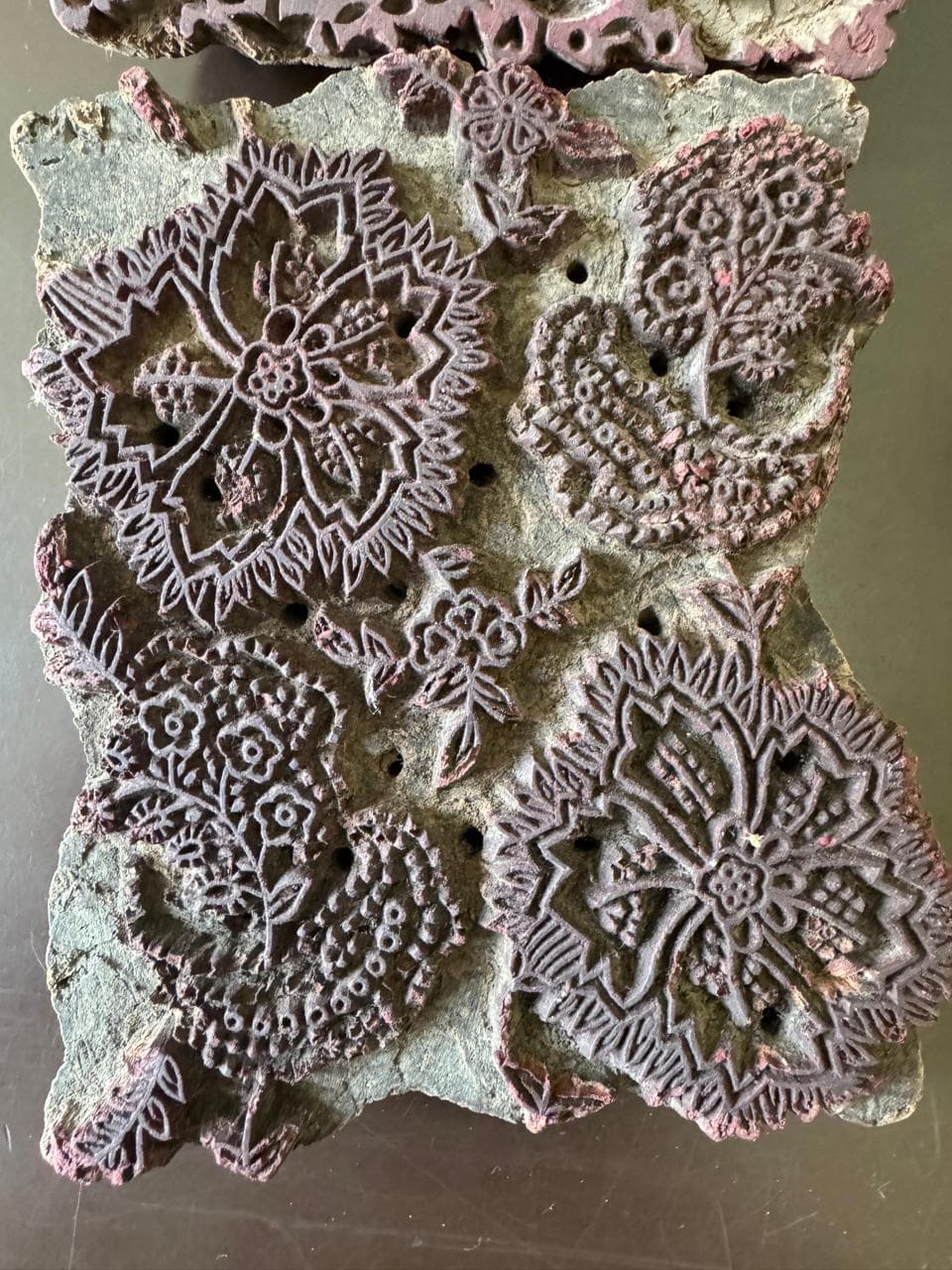
Traditional Rajasthani florals tend to be more stylized (as in butis, kairis, or lattice florals), whereas these flowers show: layered petal structure, radial symmetry with shading dots, decorative edging meant to imitate engraved textile prints This suggests adaptation for urban or cantonment markets.
The Paisley (Kairi) Elements: Transitional Trade Motifs: The curved paisley shapes visible between the rosettes are especially significant. And indicate influence from:
Sindh–Kutch trade textiles and Indo-Persian export designs. Simplified and reorganized, suggesting they were copied or adapted locally. Thus, supporting observation that Chittor printers were connected to regional merchant circulation networks. The Printers were not limited to Jajam production, they responding to colonial-era taste shifts, interacting indirectly with Gujarat trade styles and are rare documentary evidence of how smaller printing centres survived before their decline after Partition.
This layout is especially revealing: not a repeating jaal lattice (typical Sanganer), nor a panel composition (typical jajam). Instead, it resembles yardage printing for garments or furnishings, which became increasingly common between 1880–1940.
What this suggests about Chittor Printing History - This design fits a very important category: secondary-centre adaptive printing vocabulary. The combination of: European rosette, Gujarati-style paisley, dotted shading fillers, non-lattice open repeat is exactly the kind of design crossover seen between 1900–1940 in inland Rajasthan printing pockets. The Printers were not limited to jajam production, they responding to colonial-era taste shifts, interacting indirectly with Gujarat trade styles and are rare documentary evidence of how smaller printing centres survived before their decline after Partition.
Evolution in Block-Carving Traditions
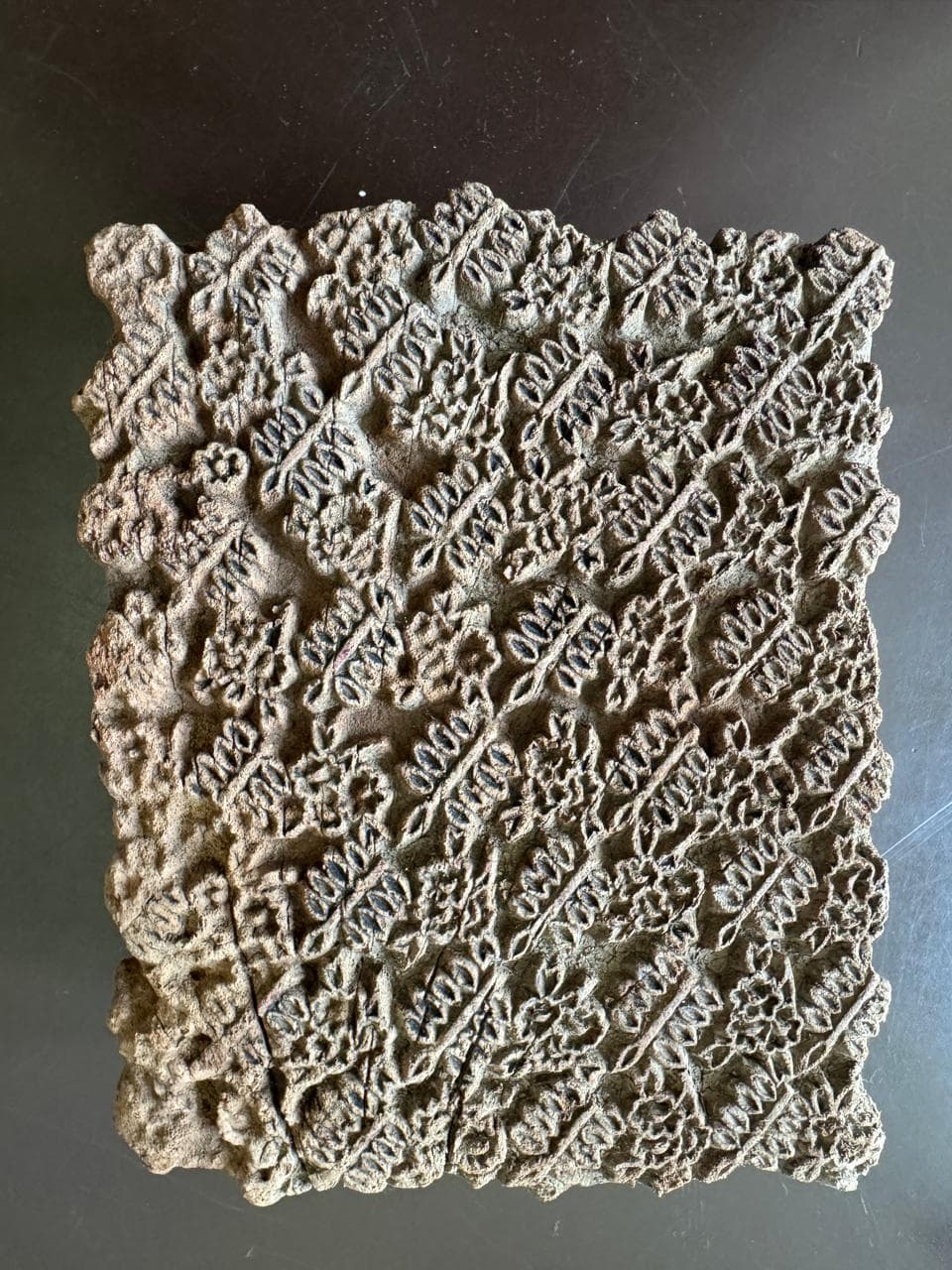
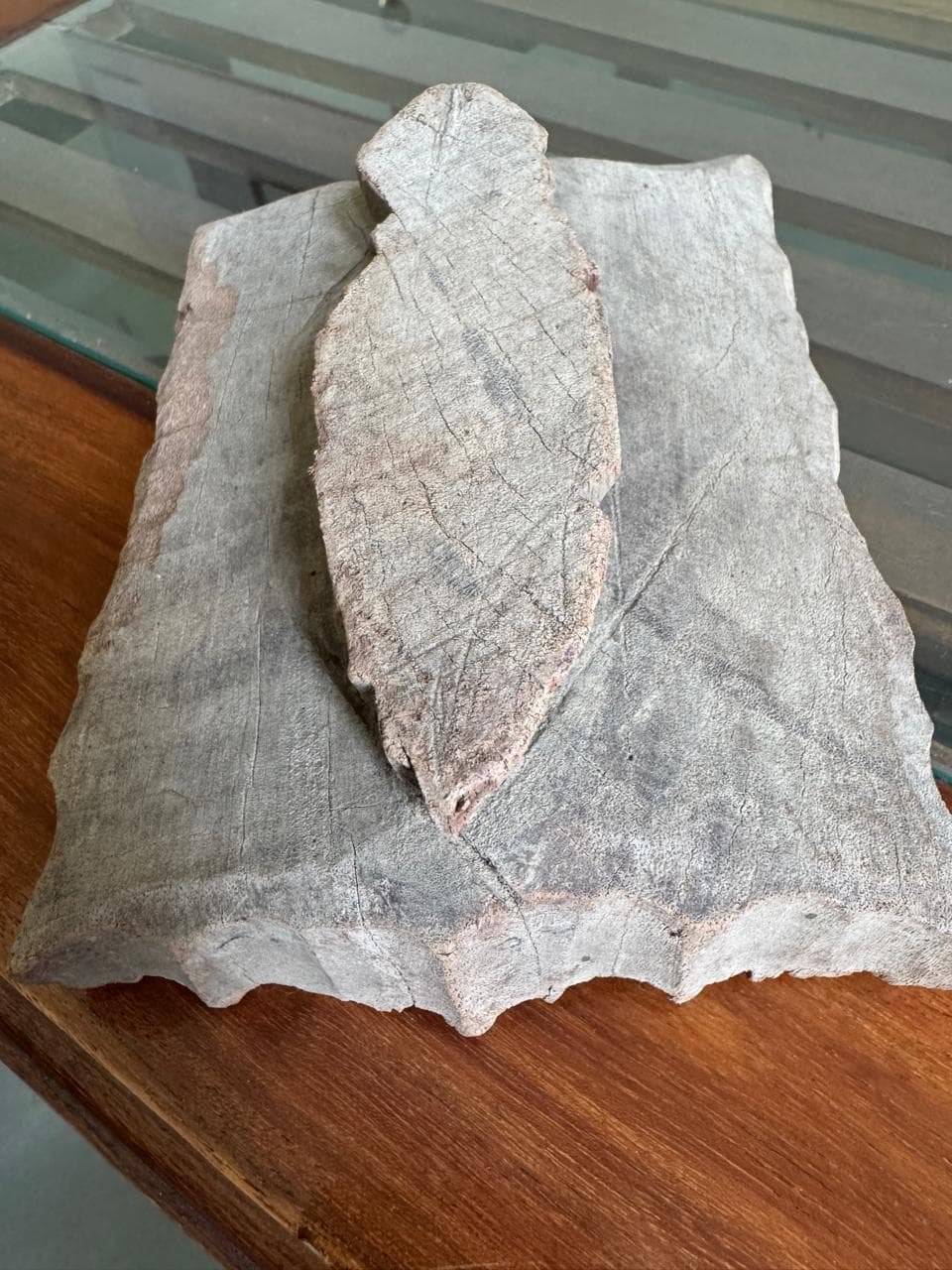
The blocks found in Chittorgarh reflect a visible evolution in the technology of block carving over time. One of the rosette blocks is carved from a single piece of wood along with its handle—an older method associated with traditional natural-dye printing systems such as shyahi–begar. These earlier blocks were thicker, sturdier, and intended for repeated use over long periods.
The second rosette block, however, has a separately attached handle and shows finer carving and greater precision. While it continues to carry Indo-European stylistic influences similar to the earlier example, its improved finish reflects advancements in carving tools, workshop specialization, and changing textile markets. Such blocks were better suited to faster yardage production and increasingly refined printing requirements.
Both types continued to be used together for decades, demonstrating how traditional printing workshops adapted gradually rather than abruptly. The transition from robust, functional carving to more delicate and refined workmanship illustrates a living craft responding to new materials, new technologies, and evolving aesthetic preferences—while still remaining rooted in its original regional tradition.
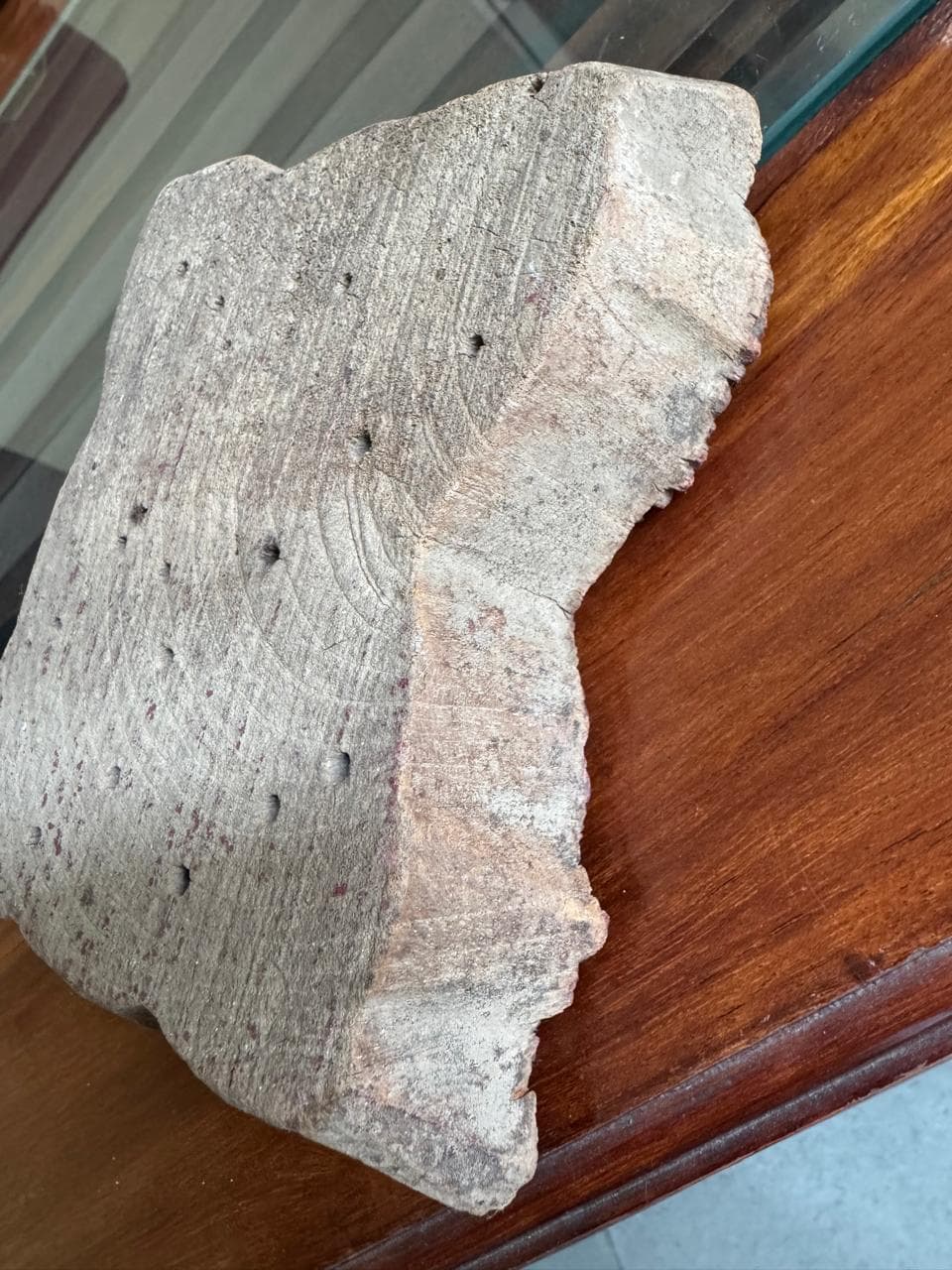
A few images of the blocks - Construction matches 1880 to 1935 period
Smt. Raj Kanwar Chundawat
Textile designer, craft researcher, educator, and entrepreneur with nearly five decades of experience in Indian hand block printing heritage.