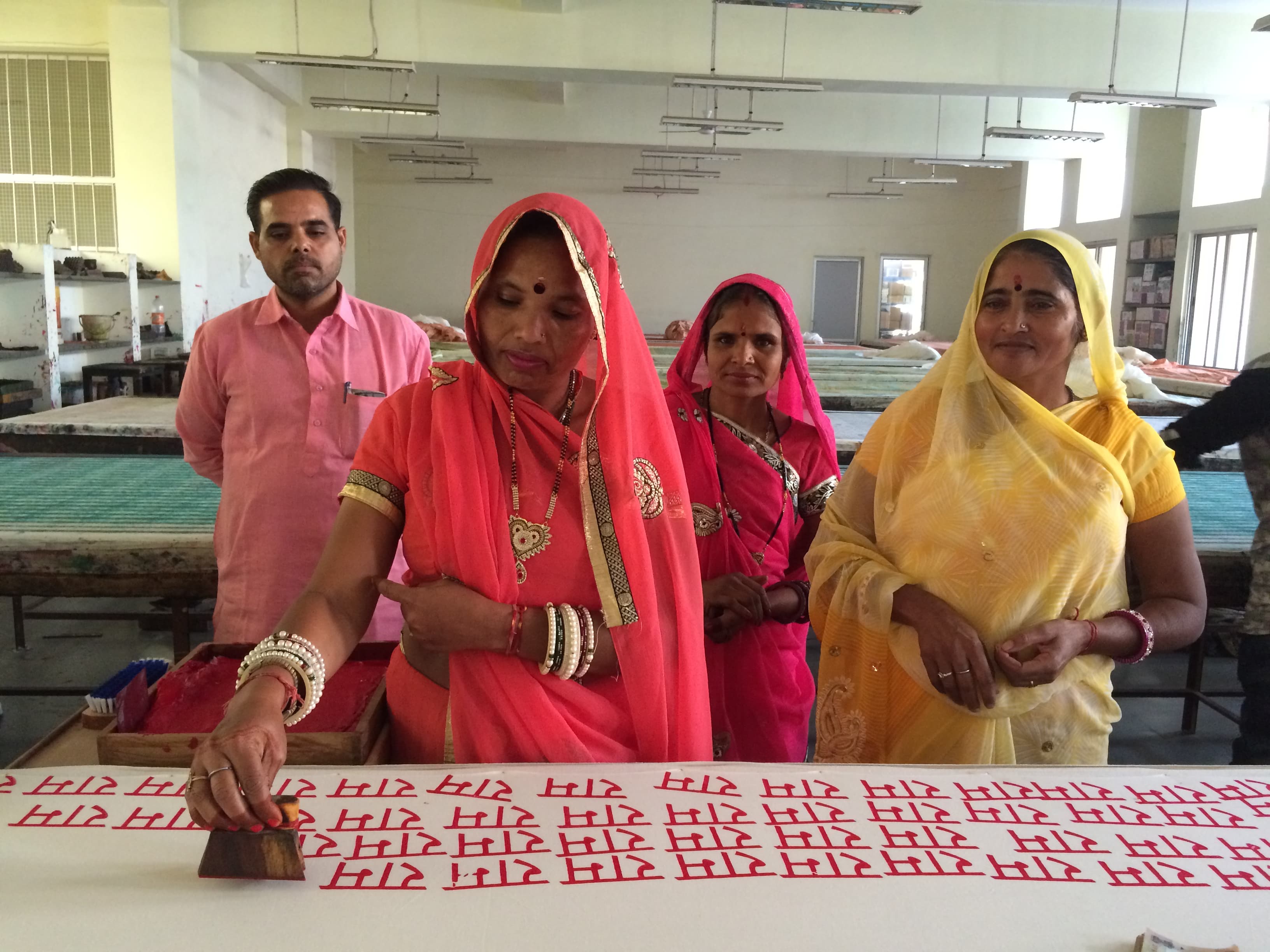
Beyond Design Schools: The Urgent Need for Master Craftsman Training in India
Beyond Design Schools: The Urgent Need for Master Craftsman Training in India
After agriculture, the craft sector remains one of India’s largest sources of employment. It supports millions through decentralized, skill-based economies across villages and small towns. For a country of India’s scale, large industry alone cannot generate sufficient employment.
Craft provides:
livelihood in rural and semi-urban regions
opportunities for self-employment and entrepreneurship
preservation of regional cultural identity
continuity of traditional knowledge systems
sustainable, low-investment production models
Most importantly, craft offers **dignified work rooted in skill**.
Strengthening this sector is therefore not only a cultural responsibility but also an economic necessity. Reviving structured training, recognizing technical expertise, and improving artisan identity are essential if crafts are to remain viable sources of employment and pride for future generations.
The Shift in Craft Communities
Across traditional craft communities—especially those engaged in process-intensive practices such as natural-dye hand block printing—a visible shift is taking place. Younger generations are choosing not to enter hereditary professions.
This is not because they lack interest in tradition. It is because craft does not provide what every profession must offer: **identity, dignity, stability, and recognition**.
Unless this changes, many traditional crafts will survive only as **studio practices** rather than as **living community knowledge systems**.
Craft Education, Identity, and the Future of Skilled Artisans
Lessons from the Maharaja School of Arts and Crafts Jaipur:
The history of the Maharaja School of Arts and Crafts Jaipur offers an important insight: the school did not treat craft as design inspiration—it treated it as a serious technical discipline requiring **long-term structured training supported by scientific knowledge**.
This raises an important question:
What did earlier craft institutions do right—and what must be rebuilt today?
The institution functioned as a three- to five-year skill-based training centre that did not separate thinking from making. Instead, it combined inherited practice with systematic instruction.
Students—often from hereditary craft families—were trained in:
drawing and ornament vocabulary
model making
machinery and apparatus handling
natural history
mineralogy and practical geology
documentation methods
workshop-based production
This approach strengthened existing craft knowledge rather than replacing it. It standardized traditional design language, preserved regional techniques, and produced artisans capable of working at high levels of technical excellence.
Craft education, in this model, meant **mastery through practice supported by knowledge.**
The Gap in Today’s Craft Education
Design institutions contribute significantly to **craft-based design education**. However, India still lacks institutions dedicated to **training process-based master craftsmen** across complete craft systems.
Traditional crafts are not single-skill activities—they involve multiple specialists working together. For example, natural-dye hand block printing includes:
washing of cloth for natural dyes
turkey-oil treatment and *harda* mordanting
colour preparation
precision block printing
post-printing washing and *bhatti* steaming
mud printing
indigo dyeing
block carving
Each stage requires experience, judgment, and control. Even small errors affect the final outcome. Traditional craft represents layered technical knowledge distributed across specialists.
Why Younger Generations Are Leaving Craft Professions
Despite the complexity and skill involved, younger members of craft families are moving away from these occupations due to structural realities:
lack of economic stability
absence of certification
limited social recognition
no career progression pathways
dependence on daily-wage structures
weak professional identity
Today, a storekeeper, accounts assistant, or call-centre employee often enjoys greater stability and recognition than a master printer or technical specialist. This is not a failure of craft—it is a failure of institutional support. Craft has not been able to provide status.
Entrepreneur-artisans sometimes receive visibility. However, the skilled individuals working within the production process—washermen, *harda* specialists, colour makers, printers, *bhatti* operators, and dyers—remain largely unrecognized as technical experts. Without identity and stability, skill cannot sustain itself across generations.
Earlier institutional models treated craft as a profession. Today, equivalent structures are largely absent.
What Needs to Be Done
The solution is not preservation alone. It is the **professionalization of craft practice**.
1. Long-duration workshop-based education
Three- to five-year training programmes—integrating science with practice through workshop-based learning.
2. Certified craft training pathways
Structured certification must extend across the entire production chain, not only to entrepreneur-artisans. Certification creates identity. Identity creates dignity. Dignity supports continuity and economic stability.
3. Making process visible to the market
Most textiles today are labelled simply as “hand block printed,” concealing the complexity of labour involved. Greater process transparency can improve public understanding, strengthen recognition of skilled work, and support fairer pricing.
4. Rebuilding prestige around craftsmanship
Income alone does not determine occupational choice—social identity also matters. Craft professions should be supported through:
state-level master craftsman registries
process-based recognition awards
documentation credit for specialists
workshop certification systems
long-duration craft diplomas
Such measures signal that society values technical expertise within traditional practice.
5. Contemporary craft education models
An effective contemporary craft school must combine in-house workshop training with structured engagement beyond the institute. Active collaboration with craft communities and industries allows students to work within living craft environments.
Certified courses led by recognized master craftsmen can further strengthen such programmes. Because craft learning is inherently practice-based, immersion in real production settings is essential. This integrated approach builds both technical proficiency and contextual understanding.
The Urgency of the Moment
If current trends continue, complex traditions such as natural-dye block printing may gradually **move out of community practice and survive only in limited studio environments.**
The lesson from earlier institutional models is clear:
Craft survives when education, science, workshop practice, and hereditary knowledge work together.
The challenge today is not merely to preserve craft objects. It is to restore identity, dignity, and professional recognition to the craftsmen who make them.
Without this, **the next generation will not continue these traditions**—and once community transmission breaks, revival becomes reconstruction rather.r than continuity.
Smt. Raj Kanwar Chundawat
Textile designer, craft researcher, educator, and entrepreneur with nearly five decades of experience in Indian hand block printing heritage.